
By Ed Cady, Contributing Editor
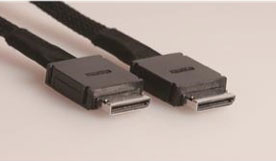
OCuLink-2—Optical Copper (Cu) Link 2nd generation—is an interconnect system for inside and outside the box that supports the new PCI Express 4.0 spec running at 16 Gbps per lane. The PCI-SIG committee selected Molex’s NanoPitch connector and cable assembly system for this OCuLink spec and it is an option for the newly developing SAS 4.0 spec with 24 Gbps per lane performance in 2- and 4-lane configuration storage links.
Internal cable assemblies and PCB receptacle connectors are available for new inside the box applications while the shielded external cable assemblies and port receptacle connectors are nearing final design, final business case inputs and tooling development by suppliers. Some suppliers may design their connector product to be able to support next generation PCI Express 5.0 running at 32 Gbps per lane for future proofing and minimizing development costs over the next few years.
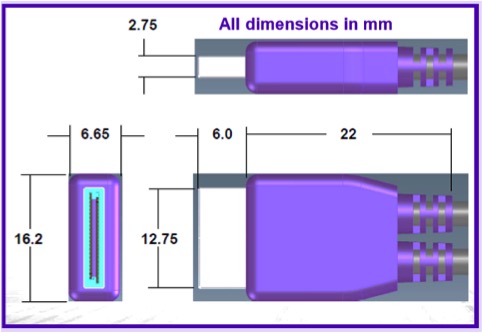
OCuLink-1 interconnect system has been on the market for a few years and has been used to support PCI Express 3.0 running at 8 Gbps per lane and mostly for inside the box applications. It has been used for some SAS 3.0 12 Gbps inside the storage box applications. The older, very heavy and very large size iPASS 4 and 8 lane connectors also developed by Molex, have been used for PCI Express 2.0 and 3.0 external cable assembly applications but in modest volumes because of the competing QSFP+’s smaller form factor and very high volume benefits. OCuLink-1 includes a 42-pin internal connector suitable for flat twin-axial cable or custom round bundle in various mesh fabric jackets for custom internal cable assemblies.
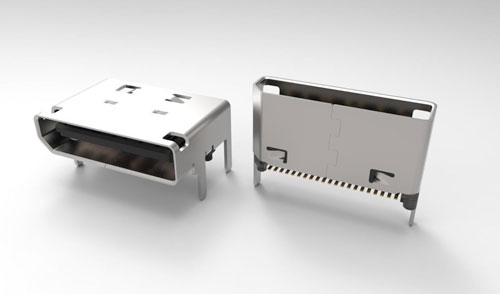
OCuLink-2 external plug connector and port receptacle connector work as a two-piece, metal-to-metal contact system. Its receptacle is as wide as the new and competing microQSFP but has lower height and shorter depth inside the box on the PCB. So active copper and active optical chips will likely need to be located within the external plug. This means the OCuLink-2 plug end weight and thermal cooling path will be outside the box and a design concern for 4 and 8 lane active cable assemblies needed for datacenter reaches. Whereas the microQSFP’s active plug connector is a PCB pad field on an inside paddleboard and extends inside the box under a Faraday shielded cage, thus it is a one-piece contact system.
OCuLink-2 external cabling usage in SAS storage systems is somewhat unclear as the new HDminiSAS 4- and 8-lane interconnect system has evolved from the dominant and traditional miniSAS connector system and has been in volume production for a few years. microQSFP will also be competing for external SAS cabling applications. For longer datacenter reaches, using a pluggable active module with a passive cable has been the norm, so OCuLink-2 will likely be used within the rack and short rack rows in new smaller datacenters that are based on Express Fabric architecture, unless some users want to have a new pluggable OCuLink-2 module and cabling interconnection system.
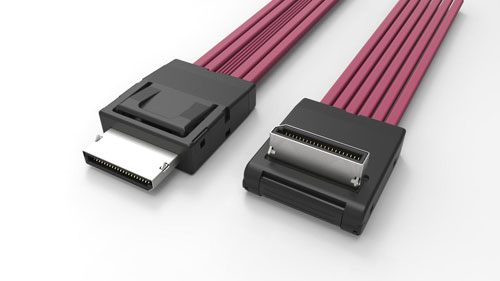
There may be some adapter cables between different devices in a datacenter that start out with OCuLink plug connector but then needs to connect to microQSFP based serves and switches. However, there is a strong industry trend towards converged I/O interface systems which usually just use one connector type for all networked devices including servers, storage, memory and communications subsystems. There is also a trend to do the E-to-O and O-to-E conversion inside the box and using just passive external optical cables. So forecasting external connector and cable assembly type usages is difficult and requires a constant pulsing of the market segments.
Still there is hope and movement to use OCuLink-2 in some newer USB 3.1 and nascent 3.2 docks and switches for 4- and 8-lane applications because the USB 3.1 Type C connector is currently limited to 2 or 3 lanes. The advent of high volume IoT related applications may facilitate more investment in OCuLInk-2 unless the Type C morphs into a Type D with 20-32 Gbps four lane connector. OCuLink-2 developers are working with PCI Express evangelists and architects associated with external networking solutions like A3Cube’s Ronniee, NVM Express storage, Avago’s Express Fabric and CrossPort Networks’s DevicePipe. These are especially targeting small to medium size datacenters applications.

Leave a Reply
You must be logged in to post a comment.