

Molex Inc., Lisle, Ill. has expanded its EdgeLine portfolio with the addition of its new, high-speed edge card connectors. These low-profile, one-piece products feature a high-speed differential contact design that enables speeds of up to 25 Gbps with excellent signal integrity. The products are the latest addition to the EdgeLine family, which provides cost-effective, flexible […]
Molex
Backplane connector is scalable up to 25 Gbps data rates

The Impact 100-Ohm backplane connector from Molex Inc., Lisle, Ill., combines speed and density in a modular package designed for high speed applications. The scalable Impact connector technology provides data rates up to 25 Gbps with excellent signal density up to 80 differential pairs per linear inch when using a 6-pair configuration. “Our network customers continue […]
Gold alternatives in connector designs
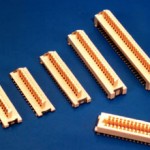
When the price of gold shot up in the ’80s, many connector manufacturers funded research into gold alternatives. In the early days, much of that work was focused on Palladium. As it turned out, Palladium is a rather brittle material that has a tendency to crack when formed after plating. But in the process, palladium nickel […]
How much gold is enough in connector designs?
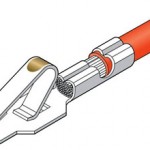
Precious metal plating on connectors protect the surface from corrosion. Sounds pretty basic, but there is a bit more to it. There is the perception that gold is good and more gold must be better. Not necessarily so. It depends upon the application. Corrosion typically occurs when corrosive elements in the air reach the connector contact […]
Molex to showcase military, aerospace connectors at MILCOM
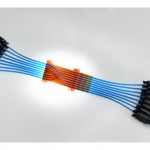
I’ve got military and aerospace connectors on the brain this week, with back-to-back posts from contributing author Dave Brearley about the importance of connectors to the industry, as well as a recent release from Molex, Lisle, Ill., about its offerings to these markets. Key to all three of these articles is the ability to safely […]
Wire-to-wire connectors for on-engine applications
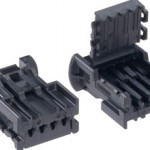
MX150 sealed connectors from Molex Inc., Lisle Ill., have been expanded to support low-level signal and power applications for on-engine automotive, commercial vehicles and off-road construction equipment. These panel-mount and twist-lock sealed bulkhead connectors and backshells are designed to meet or exceed requirements for USCAR-2 Class 3 (–40 to 125°C) operating environments. MX150 panel-mount connectors […]
Molex continues strong growth in medical applications
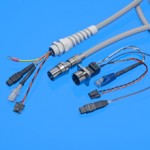
Molex Inc., Lisle, Ill., announced today that in fiscal year 2013 it experienced double-digit growth in its global medical business, due mostly to an expanded product portfolio and customer base. The company will showcase solutions for applications in implantable invasive, diagnostic imaging, therapeutic, surgical and patient monitoring at MD&M Minneapolis, October 29 – 30, booth […]
Connector Tips welcomes expert contributing author

When we launched this site just a few months ago, our goal was to bring our readers the most recent news about connector technologies, but more importantly, to give readers insight and knowledge to do their jobs better when it comes to specifying connectors and related technologies. So it is with great pleasure that we […]
Koch Industries to Buy Molex

Molex Incorporated (NASDAQ: MOLX, MOLXA announced that it has entered into a definitive agreement to be acquired by Koch Industries, Inc. Under the terms of the agreement, Koch Industries will acquire all of Molex’s outstanding shares, including the Common Stock (MOLX), the Class A Common Stock (MOLXA) and the Class B Common Stock, for $38.50 […]
Connectivity solutions for packaging machinery
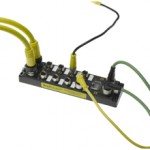
Molex Inc., Lisle, Ill. will showcase its Brad automation products at Pack Expo International, September 23 – 25, in Las Vegas, at booth 5884. Designed to meet the needs of packaging machine builders, robot manufacturers and system integrators, the products allow for implementing intelligent, on-machine control systems and enabling easy implementation of industrial network protocols, […]
